

16th International Workshop on Modeling the Ocean
Speakers
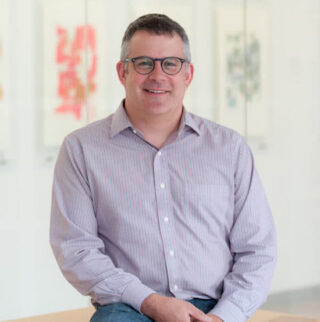
Baylor studies the physics of the ocean and how the ocean fits into the Earth’s climate system, using climate models, satellites, and autonomous observations. In 2013, Baylor joined the Department of Earth, Environmental, and Planetary Sciences at Brown University, after working in other roles at the University of Colorado, Princeton, NOAA, the Woods Hole Oceanographic Institution, and MIT. He co-led the Ocean, Cryosphere, and Sea Level Change chapter of the IPCC Sixth Assessment Physical Science Basis (WGI) Report, and he is presently co-chair of a World Climate Research Program Core Project on Earth System Modelling and Observations.
At Brown, Baylor works mainly within the Oceans, Ice, and Atmospheres Research Group. He is the STEM faculty director of the Equitable Climate Futures initiative, an elected fellow of the Institute at Brown for Environment and Society (IBES), an affiliated faculty member of the Brown Theoretical Physics Center, the Brown Center for Fluid Mechanics, and the Initiative for Sustainable Energy, and he supports the SciToons and Vis-A-Thon programs. He is also an associate editor of Science Advances and a JASON.
His Ph.D. is from the MIT/WHOI Joint Program in Oceanography working with Joe Pedlosky (at WHOI) and Paola Rizzoli (at MIT). In his pre-oceanographic career, He trained in physics at Reed with Nick Wheeler and at Brandeis with Stanley Deser and X.-J. Wang.
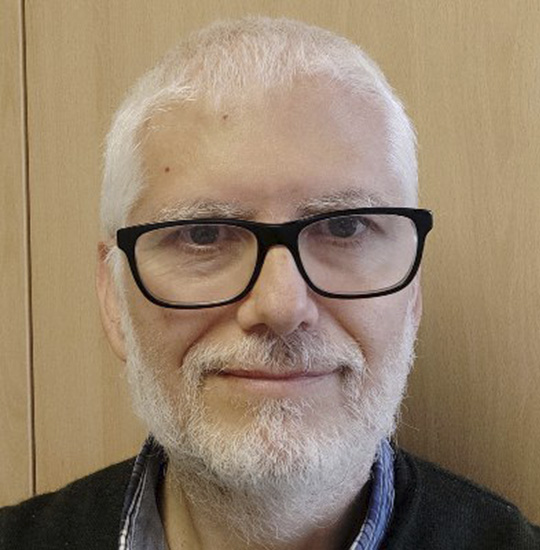
Emilio Hernández‑García is a physicist whose research explores the interplay between physical processes and biological dynamics in the ocean. His work integrates nonlinear dynamics, statistical physics, and numerical modelling to investigate transport, mixing, and the emergence of spatial structures in marine environments. He has made significant contributions to the development and application of Lagrangian methods in oceanography —particularly Lyapunov‑exponent techniques and flow‑network approaches — to characterize coherent structures and assess their influence on plankton dynamics and the shaping of marine ecosystems.
After holding positions at the University of the Balearic Islands and at McGill University in Montreal, he is now a CSIC Research Professor at the Institute for Cross‑Disciplinary Physics and Complex Systems (IFISC) in Mallorca. There, he leads and collaborates on projects addressing ocean transport, ecological modelling, and climate‑related variability. His publications span theoretical advances, methodological innovations, and interdisciplinary applications, frequently bridging physics and marine science to tackle complex oceanographic questions.
Joanna Staneva is a physical oceanographer whose research focuses on coastal and regional ocean modelling, wave–current–atmosphere interactions, and data assimilation. Her work integrates numerical modelling, observational data, and machine learning to advance the understanding of coastal hydrodynamics, extreme sea states, and the predictability of the ocean system. She has made significant contributions to the development of coupled wave-ocean-atmosphere frameworks and to the improvement of operational forecasting systems, with applications spanning the North Sea, the Baltic Sea, and the Black Sea.
Joanna is a Senior Scientist and Head of the Department of Hydrodynamics and Data Assimilation at the Institute of Coastal Systems, Helmholtz-Zentrum Hereon, in Geesthacht, Germany. She holds a Diploma in Physics and a PhD in Physical Oceanography from the University of Sofia, Bulgaria. At Hereon, she leads research on multi-scale ocean modelling, coastal hazards, and the development of Digital Twins of the Ocean (DTOs) — a framework she actively promotes as co-chair of the international DITTO programme and through coordination of the Horizon Europe project FOCCUS.
Her scientific output spans theoretical and applied contributions to wave modelling, data assimilation schemes — including variational and neural-network-based approaches — and coupled Earth system modelling. She is a regular contributor to the Copernicus Marine Service Ocean State Reports and participates in a broad network of international collaborations bridging operational oceanography, climate science, and coastal management.